
The right treatment starts with the right question
September 18, 2026
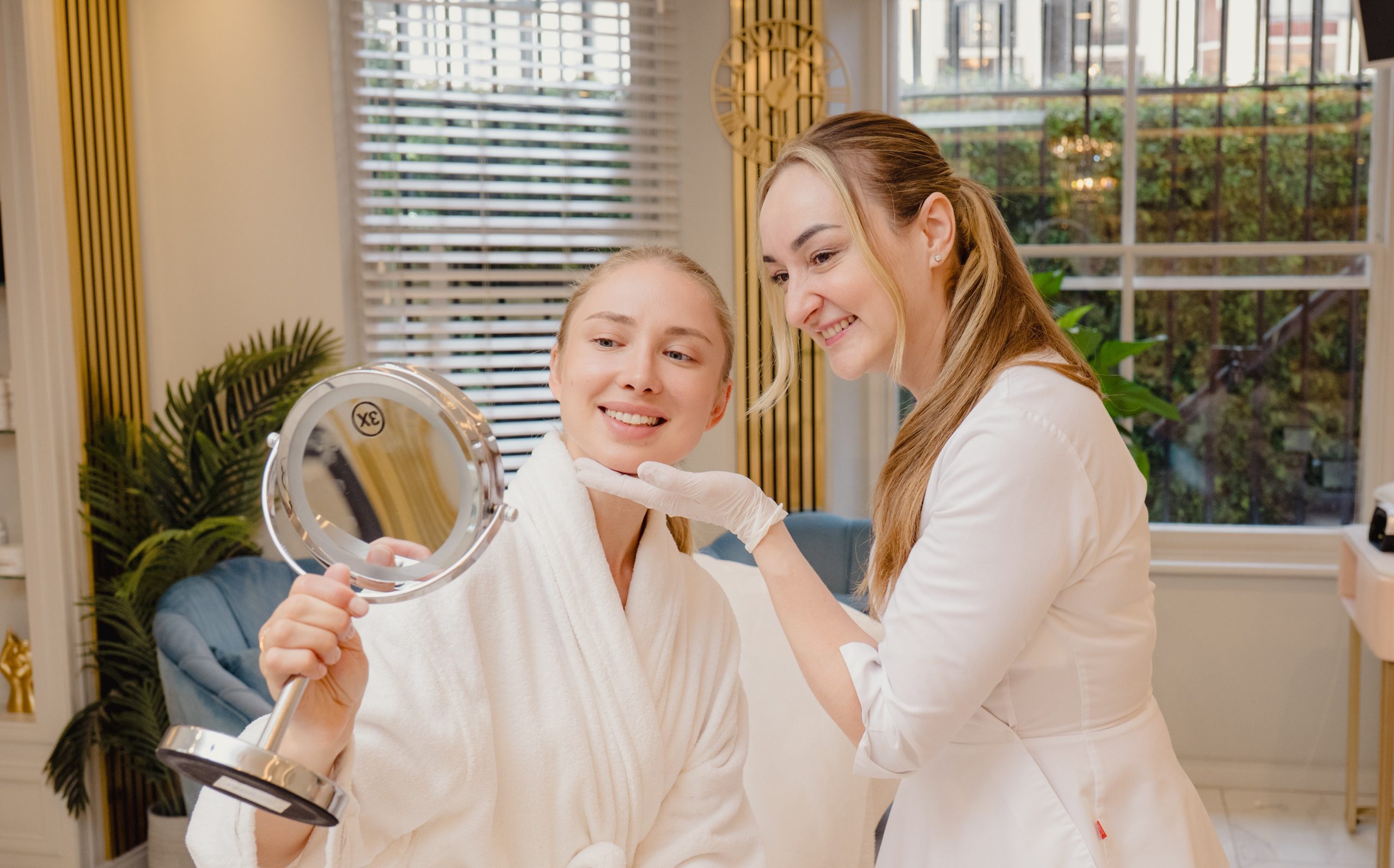
Why choosing an aesthetic treatment should begin with understanding your skin — not with following a trend.
“I think I need filler.”
“I’ve heard Morpheus8 is good.”
“Should I have laser?”
“I want my jawline to look more defined.”
These are questions we hear more and more often.
And there is absolutely nothing wrong with knowing about aesthetic treatments or having a particular procedure in mind.
But there is an important question that should come first:
What are we actually trying to improve?
Because the same concern can have very different underlying factors.
And the same treatment will not necessarily be appropriate for every person.
At Dubova Beauty, we believe that aesthetic medicine works best when the treatment follows the assessment — not the other way around.
Social media has made aesthetic treatments easier to discover than ever.
You can learn about a device in a few seconds.
You can watch a treatment video.
You can see a before-and-after photograph.
You can hear someone describe their experience.
And suddenly, a procedure that you had never considered before can feel like the obvious answer.
But there is a difference between knowing what a treatment is and knowing whether it is appropriate for you.
For example, someone may be concerned about:
Each of these concerns can have different contributing factors.
That is why the first step should be understanding the concern itself.
Imagine someone says:
“I want laser treatment because my skin doesn’t look as even as it used to.”
That tells us what they are interested in.
It doesn’t yet tell us what treatment they need.
The appearance of uneven skin tone can have different causes and may require different approaches.
Depending on the individual assessment, options such as Lumecca IPL, Candela Frax, professional skincare or other treatments may be discussed.
The important point is that the device should not be chosen simply because it is popular.
The question is:
What approach is appropriate for this particular concern and this particular skin?
Another reason personalised assessment matters is that aesthetic concerns rarely exist in isolation.
For example, someone may notice that their lower face looks less defined.
They may immediately think:
“I need filler.”
But facial appearance can also be influenced by skin firmness, soft tissue, facial proportions and other individual factors.
For a suitable patient, different treatment approaches may be considered depending on what is actually contributing to the concern.
These may include treatments such as:
Dermal fillers
Morpheus8
Ultherapy PRIME
or an appropriate skincare strategy.
These treatments are not interchangeable.
Each has a different purpose, and suitability needs to be considered individually.
There is a common assumption in aesthetics that a more extensive treatment plan must produce a more significant improvement.
But a thoughtful treatment plan is not about the number of procedures.
It is about relevance.
If one treatment addresses the concern being discussed, there may be no reason to add another simply because it is available.
And if the primary concern is skin quality, adding volume may not be the most relevant approach.
This is why we prefer to establish priorities first.
What is the main concern?
What factors may be contributing to it?
What options may be appropriate?
Only then does it make sense to discuss treatment.
Your skin is affected by many individual factors.
Age is only one of them.
Skin type, pigmentation, previous sun exposure, skincare habits, previous procedures and current skin condition can all be relevant when considering aesthetic treatment.
This is particularly important when discussing energy-based procedures and resurfacing treatments.
A treatment that may be suitable for one patient may not be suitable for another at the same time.
That is why a professional consultation should include a discussion of your skin, your medical history where relevant, your previous treatments and your expectations.
Another question that is often overlooked is:
“Is now the right time?”
Treatment suitability can depend on circumstances such as recent sun exposure, current skin sensitivity, previous procedures and other individual factors.
This does not necessarily mean that a treatment is unsuitable altogether.
It may simply mean that timing needs to be considered carefully.
A professional plan is not only about what to do.
It is also about when to do it.
Trends can be useful.
They can introduce you to treatments you may not have known about.
But popularity is not the same as suitability.
A treatment can be widely discussed online and still not be the right option for your individual concern.
At Dubova Beauty, our range includes technologies and treatments such as:
The purpose of having a broad range of options is not to suggest that everyone needs them.
It allows us to consider different approaches when they are relevant to the individual patient.
Instead of starting with:
“Which treatment should we book?”
we prefer to start with:
“What would you like to improve?”
Then we can explore the concern more carefully.
For example:
We may discuss treatments and skincare approaches that are relevant to the appearance and condition of the skin.
We may consider the nature of the pigmentation, recent sun exposure, current skin condition and whether an IPL or other approach may be appropriate.
Treatments such as Morpheus8 or Ultherapy PRIME may be discussed for suitable patients, depending on the individual assessment.
Dermal filler may be one of the options considered where appropriate.
A combination of professional skincare and selected treatments may be discussed depending on the patient’s goals and skin condition.
The treatment follows the concern.
Not the trend.
A good consultation should give you more than the name of a procedure.
You should leave with a clearer understanding of:
What you are concerned about.
What may be contributing to it.
Which treatment options may be relevant.
What the limitations of those options are.
What the potential risks are.
And what kind of result can realistically be expected.
No responsible practitioner should promise a specific outcome.
Individual responses vary, and aesthetic procedures have limitations and potential risks.
That is why informed decision-making matters.
This is perhaps one of the most useful things to remember before an aesthetic consultation.
You don’t need to arrive saying:
“I know exactly what I need.”
You can simply say:
“This is what I’m noticing, and this is what I’d like to understand.”
That is enough to start a meaningful conversation.
You can also bring photographs if they help explain what you like or what you would prefer to change.
However, photographs — particularly edited or filtered images — should not be treated as a promise of what treatment can achieve.
The ASA considers before-and-after images in cosmetic advertising to be potential efficacy claims, and marketers need appropriate evidence and genuine, properly documented imagery.
At Dubova Beauty, we believe that good aesthetic medicine should feel personal.
Not because everyone needs a completely different collection of treatments.
But because every face, every skin type and every aesthetic concern is different.
The aim is not to create a standardised look.
It is to understand what you would like to change and consider whether there is an appropriate way to address it.
Sometimes that may involve one treatment.
Sometimes a combination of approaches may be considered.
And sometimes the most appropriate plan is simply to focus on skincare or timing before considering a procedure.
The decision should be based on your individual circumstances.
With more than 23 years of experience in aesthetic medicine, our approach is centred around individual assessment and carefully considered treatment planning.
We offer a broad range of technologies and aesthetic treatments, but we do not believe that one procedure can be the answer to every concern.
Our role is to help you understand your options.
To discuss suitability.
To explain what a treatment is designed to address.
And to make sure expectations are realistic before you make a decision.
Because the most important part of an aesthetic treatment is not simply choosing a procedure.
It is choosing the right approach for you.
No. You can simply explain what you would like to improve. The appropriate options can then be discussed following an individual assessment.
Yes. Individual anatomy, skin condition, previous treatments, expectations and other factors can affect treatment suitability.
Not necessarily. A treatment should be considered according to the individual concern, available evidence, suitability and expected benefits and limitations.
In some circumstances, different treatments may be considered as part of an individual plan. Whether combining treatments is appropriate depends on the patient and the procedures involved.
The consultation is designed to help establish suitable options and expectations. Treatment suitability should be considered individually, and no specific outcome can be guaranteed.
Aesthetic medicine has never offered more options.
And that is exciting.
But having more options makes professional assessment even more important.
So before asking:
“Which treatment should I have?”
try asking:
“What exactly am I trying to improve — and what options are appropriate for me?”
That small change in the question can completely change the conversation.
At Dubova Beauty, we believe that the best aesthetic decisions begin with understanding — not with following a trend.
Your skin is individual.
Your face is individual.
Your treatment plan should be too.
All treatments are subject to individual assessment. Suitability, potential benefits, limitations and risks vary between individuals. No specific result can be guaranteed. Patients should discuss their medical history, previous treatments, current skin condition and expectations with an appropriately qualified practitioner before treatment.